
That Was the Week That Was - 10th May 2025
Geopolitical & Defence Intelligence Briefing
Week of 3rd – 9th May 2025
1. Introduction
It’s been a week where diplomacy met deterrence—and not always on speaking terms. While NATO edged closer to a strategic compromise, the Red Sea edged closer to open conflict, and South Asia reminded us that historical grievances don’t do ceasefires. Across multiple theatres, the balance between escalation and restraint has rarely looked so thin. Let’s begin.
2. Top Geopolitical & Defence Events of the Week
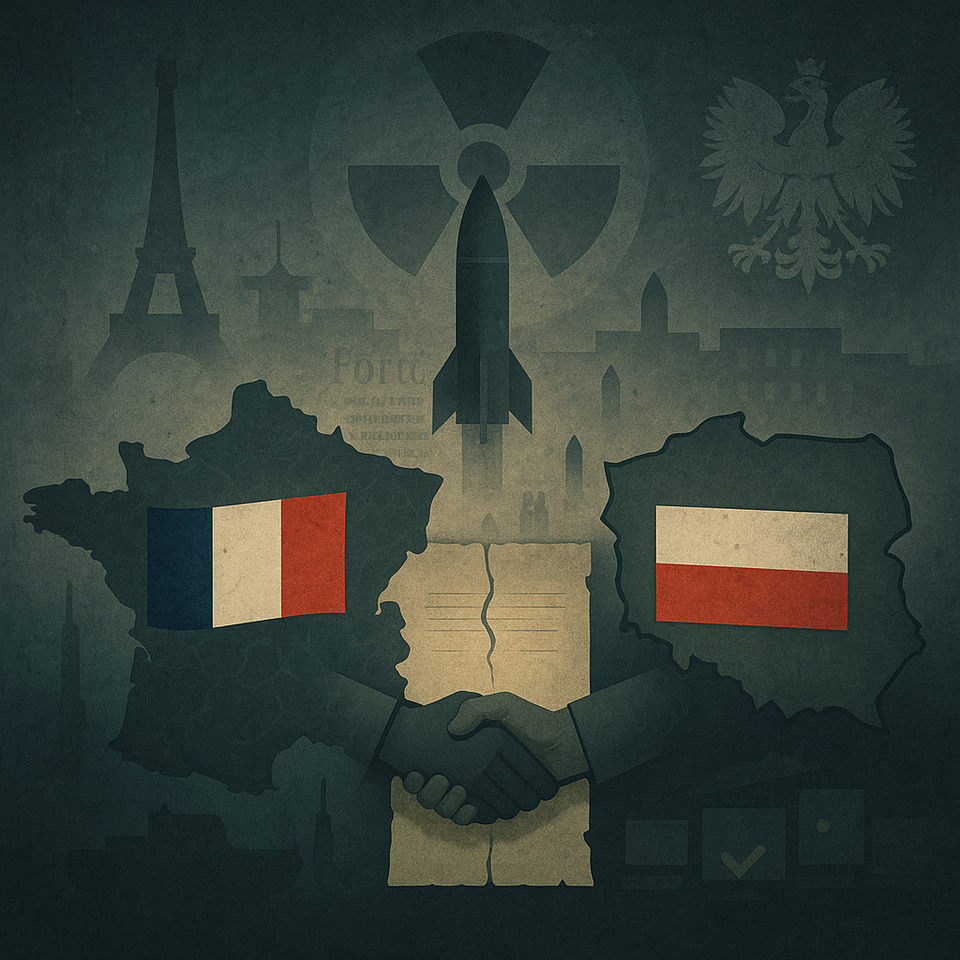
France and Poland Sign Mutual Defence Pact
In a move with historic and strategic weight, France and Poland signed their first-ever bilateral defence treaty on 8th May in Nancy. The pact includes joint operational planning, coordination on European defence procurement, and—most notably—language suggesting France’s nuclear deterrent may extend de facto coverage to Poland. Macron framed it as a signal of Europe’s readiness to “assume strategic responsibility,” while Warsaw positioned it as a hedge against NATO’s transatlantic uncertainty. The timing, on the anniversary of V-E Day, was no coincidence.
NATO’s Two-Tier Spending Proposal Gains Traction
Secretary General Mark Rutte presented a formal outline for NATO’s evolving burden-sharing model: 3.5% of GDP for core defence, plus 1.5% for critical infrastructure and resilience. The proposal aims to counter U.S. pressure—especially from Donald Trump—for a blunt 5% target, while offering politically palatable flexibility to member states. Early feedback from Berlin, Ottawa, and Rome suggests cautious endorsement. The Hague Summit in June will be the key test.
Red Sea Escalation: Houthi–Israeli Hostilities Widen
Between 4–7 May, the Houthis launched long-range drones and missiles targeting Israeli infrastructure, claiming retaliation for U.S. and UK strikes on their positions. Israel responded with airstrikes on Sanaa and Hodeidah. The USS Harry S. Truman reported the loss of two aircraft in what CENTCOM described as “non-combat operational incidents,” highlighting the hazards of high-intensity deployment. With Tehran denying direct involvement, Washington is pressuring Oman and Qatar to revive regional de-escalation talks.
India and Pakistan Exchange Limited Strikes
Following last week’s deadly attack in Pahalgam, the Indian Air Force carried out strikes on suspected militant camps inside Pakistani territory. Pakistan responded with cross-border missile fire and claimed several aircraft were downed—claims India disputes. Both sides have restricted civilian airspace, recalled diplomatic staff, and increased troop readiness along the Line of Control. The crisis has rattled markets and drawn quiet but pointed concern from Beijing and Washington.
Germany Fast-Tracks Defence Procurement
Germany’s Bundestag approved emergency legislation shortening procurement cycles for high-priority defence projects. Berlin cited the worsening security situation in Eastern Europe, alongside growing public pressure to meet NATO’s 2% threshold. The Bundeswehr will now have expanded discretionary authority over ISR, cyber and air defence acquisitions, bypassing standard budgetary procedures.
3. How These Events Connect (or Don’t)
The France–Poland pact and NATO’s evolving spending framework are parts of a broader European recalibration—one that accepts the possibility of U.S. retrenchment and seeks strategic resilience without declaring independence from Washington. Meanwhile, the Red Sea and South Asian theatres serve as grim reminders: even as NATO debates budget lines, regional actors are shaping the battlefield in real time, often beyond traditional alliances. Germany’s fast-tracking of procurement is less an isolated reform than an acceleration of the same strategic logic: act now, debate later.
4. Predictions for the Month Ahead
- Hague Summit Outcome
Expect a formal declaration adopting the two-tier model in principle, with national commitments deferred to Q4 budget cycles. Trump’s 5% demand will remain a looming reference point, but not a binding reality. - France’s Nuclear Deterrence Debate
Following the Poland deal, expect domestic pressure in France to clarify what, exactly, Paris’s nuclear “umbrella” now means—and whether it extends to the Baltics or only to Warsaw. - South Asia De-escalation Watch
External mediation—likely via the UAE or China—may begin behind the scenes. But with Indian elections ongoing and Pakistan’s political establishment under stress, neither side can afford to look weak. - Red Sea: More Naval Assets, Not Less
Despite de-escalation talks, expect a temporary increase in coalition maritime patrols. U.S. Navy incidents will trigger operational reviews, but Washington is unlikely to withdraw carrier presence in the near term.
5. Fun Fact of the Week
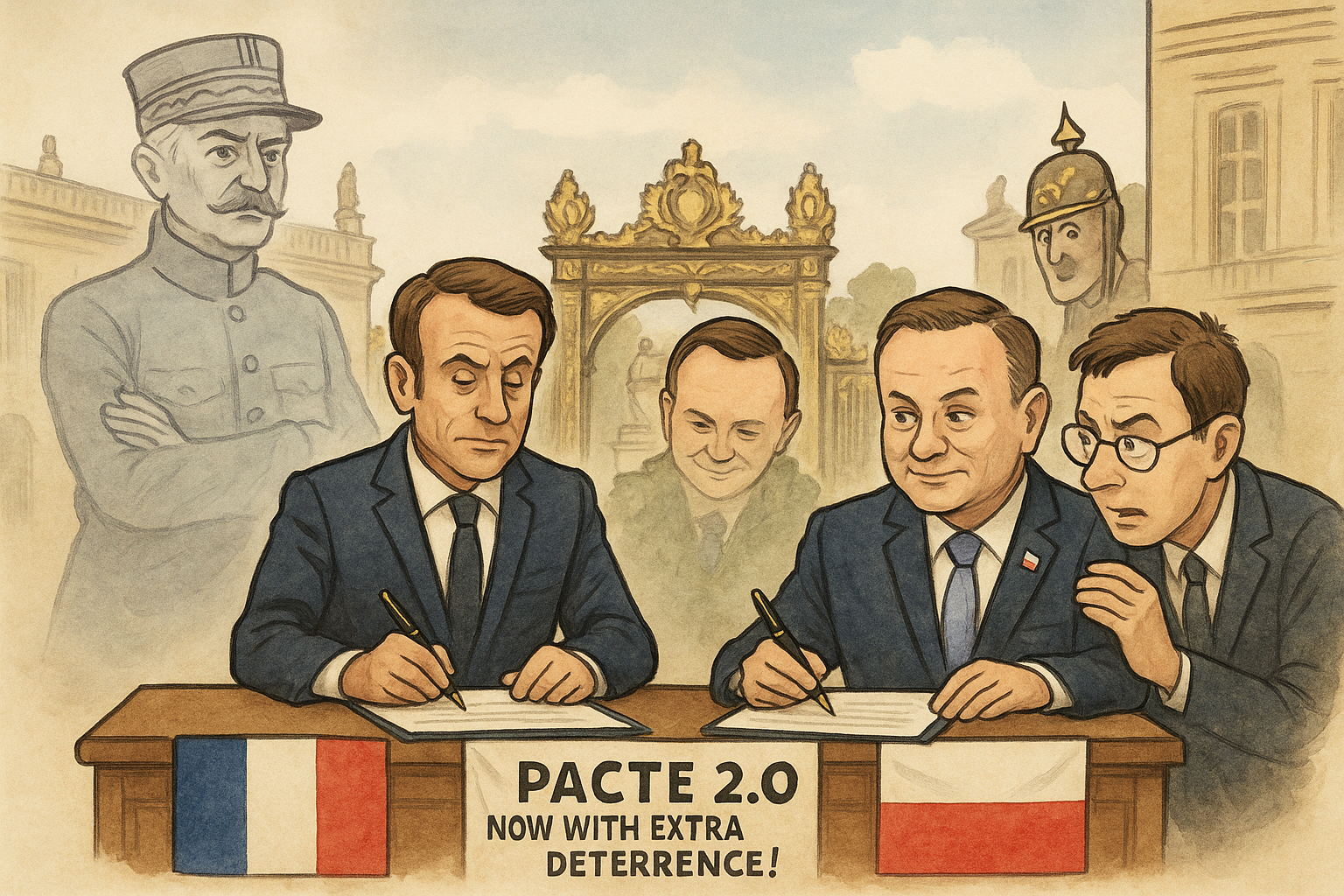
The Franco-Polish defence pact was signed in Nancy, a city famed not just for its Art Nouveau heritage but for being Marshal Foch’s Eastern Front HQ in 1918. During the ceremony, one French staffer reportedly quipped that the last time a French alliance started in Nancy, Europe had two empires and a Kaiser. Whether this one ends more smoothly remains to be seen.
End of Report