
No Human in the Loop - 24th May 2025
Dispatches from the Algorithmic Front
Week of 17–23 May 2025
Introduction
In an era where algorithms dictate the tempo of conflict, this week underscored a pivotal shift: the battlefield is increasingly dominated by autonomous systems and AI-driven strategies. From the steppes of Eastern Europe to the contested waters of the Indo-Pacific, the integration of artificial intelligence into military operations is no longer a theoretical exercise but a practical reality. The question is no longer if AI will change warfare, but how swiftly and profoundly it will do so.
This Week’s Algorithmic Flashpoints
1. Taiwan’s Drone Surge: Asymmetric Deterrence in Action
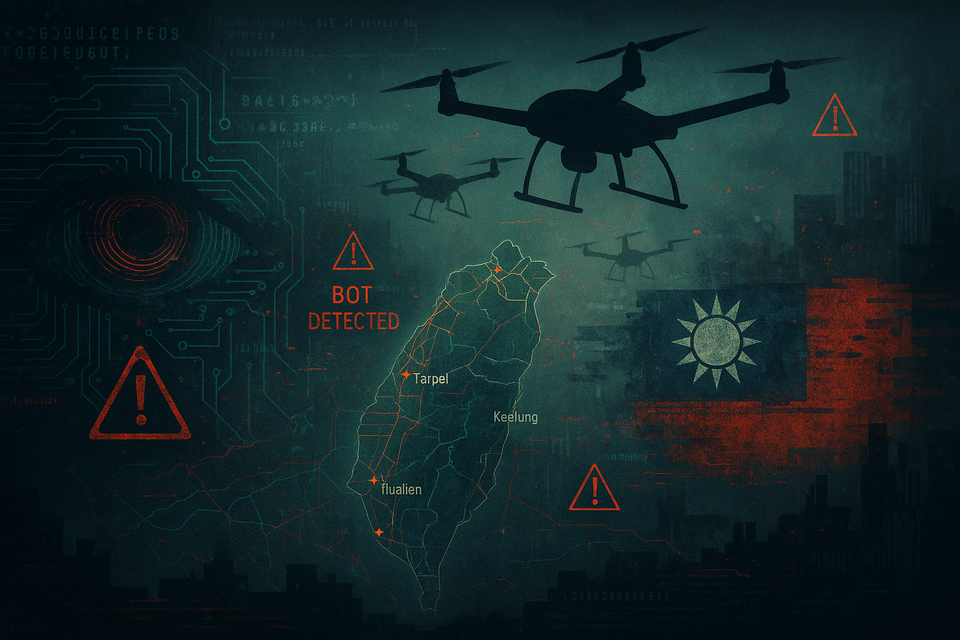
Taiwan announced the formation of new drone units within its military, aiming to produce over 3,200 domestically-built drones within five years. This move, inspired by Ukraine’s effective use of drones against Russia, signifies a strategic pivot towards asymmetric warfare to counterbalance China’s military superiority.
Why it matters: Taiwan’s emphasis on drone warfare reflects a broader trend where smaller states leverage AI and unmanned systems to offset conventional military disadvantages.
Risk vector: The proliferation of drone technology in volatile regions increases the risk of rapid escalation and unintended engagements.
2. China’s ‘Jiu Tian’: The Drone Mothership Takes Flight
China unveiled the ‘Jiu Tian,’ a drone carrier capable of deploying AI-controlled drone swarms. With a range of 4,350 miles and the ability to fly at 50,000 feet, it represents a significant advancement in unmanned aerial capabilities.
Why it matters: The ‘Jiu Tian’ enhances China’s power projection and could overwhelm traditional air defense systems through swarm tactics.
Risk vector: The deployment of such platforms may trigger an arms race in autonomous aerial systems, complicating regional security dynamics.
3. India’s AI-Driven Anti-Drone Shield: Indrajaal Infra
India deployed ‘Indrajaal Infra,’ an AI-powered system designed to protect critical infrastructure from drone threats. Successfully operational at a naval port in Gujarat, it integrates AI threat detection with sensors and jammers.
Why it matters: As drone threats become ubiquitous, AI-driven defense systems like Indrajaal Infra are essential for safeguarding strategic assets.
Risk vector: Reliance on AI for defense introduces concerns about system vulnerabilities and the potential for adversarial exploitation.
4. Russian Cyber Espionage Targets Western Aid to Ukraine
The U.S. National Security Agency reported that Russian military intelligence-affiliated hackers have been targeting Western firms involved in supplying aid to Ukraine. Tactics included spearphishing and exploiting vulnerabilities in networks to access data and surveillance footage.
Why it matters: Cyber operations are being used to gather intelligence on logistical operations, potentially undermining aid efforts.
Risk vector: Such cyber activities blur the lines between espionage and active interference, raising the stakes for cyber conflict escalation.
5. U.S. Special Operations Embrace AI to Reduce Cognitive Load
U.S. Special Operations Forces are increasingly integrating AI technologies to streamline combat and administrative tasks. Applications include mission planning, situational awareness, and logistics management.
Why it matters: AI integration enhances operational efficiency and decision-making speed, critical in high-tempo environments.
Risk vector: Over-reliance on AI systems may lead to vulnerabilities if these systems are compromised or malfunction.
6. British Army’s ‘20-40-40’ Strategy: A New Force Composition
The British Army unveiled its ‘20-40-40’ strategy, allocating 20% of fighting power to heavy equipment, 40% to expendable munitions like drones, and 40% to reusable high-end drones. This reflects lessons learned from recent conflicts emphasizing the role of unmanned systems.
Why it matters: This strategic shift underscores the growing importance of drones and AI in modern military doctrine.
Risk vector: Transitioning to such a model requires significant investment and training, posing challenges during the interim period.
7. QinetiQ Secures £1.5 Billion UK Defence Contract
British defence firm QinetiQ received a £1.5 billion contract extension to provide testing and evaluation services for the UK Armed Forces, including live-threat scenarios and equipment trials.
Why it matters: The contract ensures that UK forces have access to cutting-edge testing environments, crucial for integrating new technologies.
Risk vector: Dependence on a single firm for critical testing services may pose risks if not managed with appropriate oversight.
Signals in the Noise
The convergence of AI and military operations is no longer a future prospect but a present reality. Taiwan’s rapid development of drone units, China’s deployment of the ‘Jiu Tian,’ and India’s implementation of AI-driven defense systems illustrate a global trend towards autonomous warfare capabilities. Simultaneously, cyber operations targeting logistical networks, as seen in Russian activities against Western aid to Ukraine, highlight the increasing role of cyber warfare in modern conflicts. The integration of AI into military strategies, as evidenced by the U.S. and UK initiatives, underscores a paradigm shift in defense planning and execution.
Prediction Protocol
1. Escalation of Autonomous Systems Deployment
Expect accelerated deployment of autonomous systems across various military domains, with nations investing heavily in AI-driven platforms to gain strategic advantages.
2. Intensification of Cyber Warfare Tactics
Cyber operations will become more sophisticated, targeting not only military assets but also critical infrastructure and supply chains, necessitating enhanced cybersecurity measures.
3. Evolution of Military Doctrines
Military doctrines will continue to evolve, incorporating AI and autonomous systems as central elements, leading to restructuring of force compositions and operational strategies.
Black Box – The Hidden Story of the Week
NATO Recognises Ukraine’s AI Combat Research
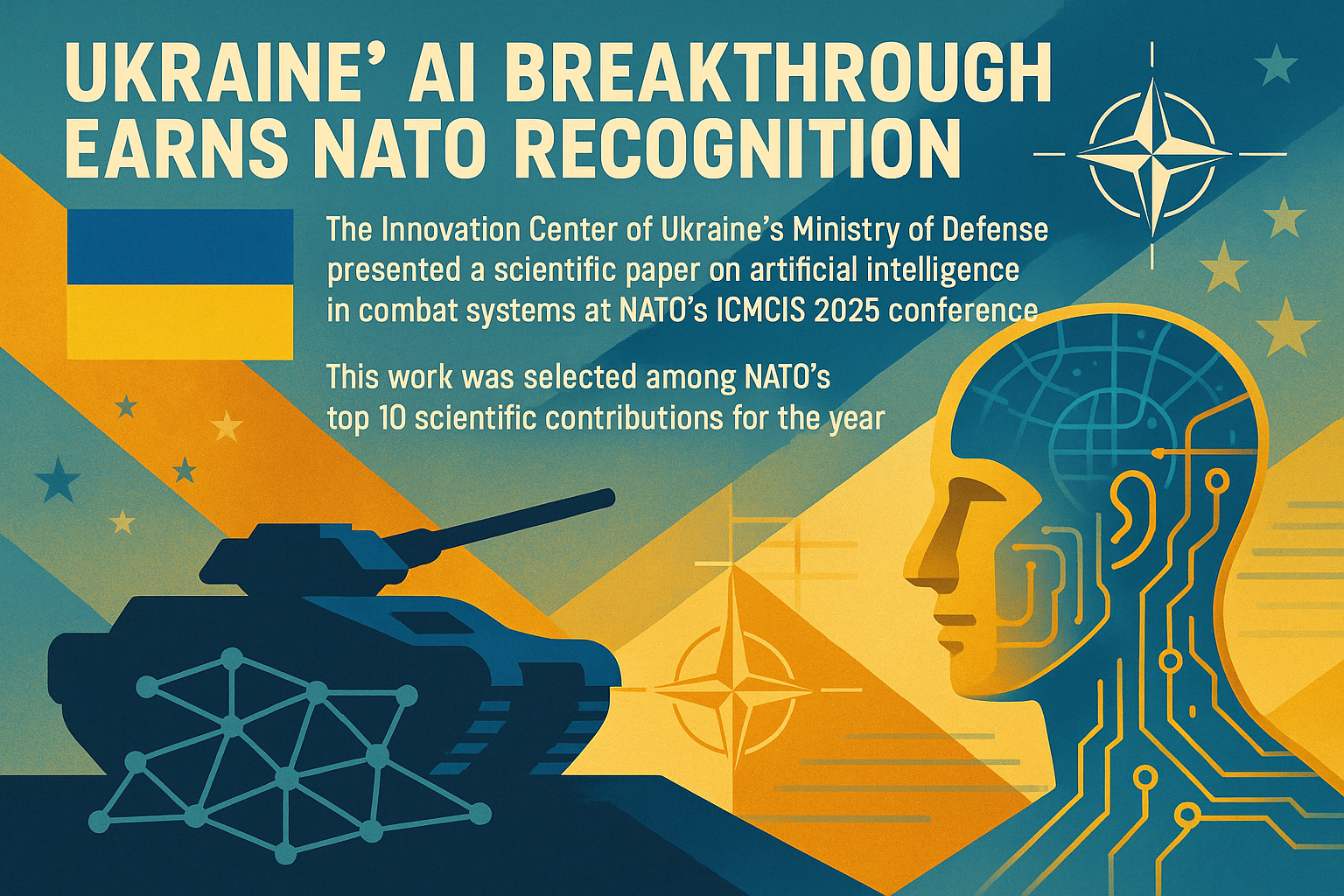
The Innovation Center of Ukraine’s Ministry of Defense presented a scientific paper on artificial intelligence in combat systems at NATO’s ICMCIS 2025 conference. This work was selected among NATO’s top 10 scientific contributions for the year, highlighting Ukraine’s advancements in AI military applications.
Why it matters: Ukraine’s recognition by NATO for its AI research signifies the country’s growing role in developing and implementing AI technologies in warfare, potentially influencing NATO’s future strategies.
Risk vector: The integration of AI into combat systems raises concerns about the ethical implications and the need for robust governance frameworks to manage autonomous weapons.
Dispatch Ends