
No Human in the Loop – 3rd May 2025
Dispatches from the Algorithmic Front - 26th April to 2nd May 2025
Introduction
If April showers bring May flowers, then this past week’s deluge of AI, war, and cyber developments has sown a particularly tangled garden. From AI-driven disinformation campaigns to cyberattacks disrupting high-street retailers, the digital battlefield is in full bloom. Let’s prune through the thicket of events that have unfolded.
Top AI, War, and Cyber Events of the Week
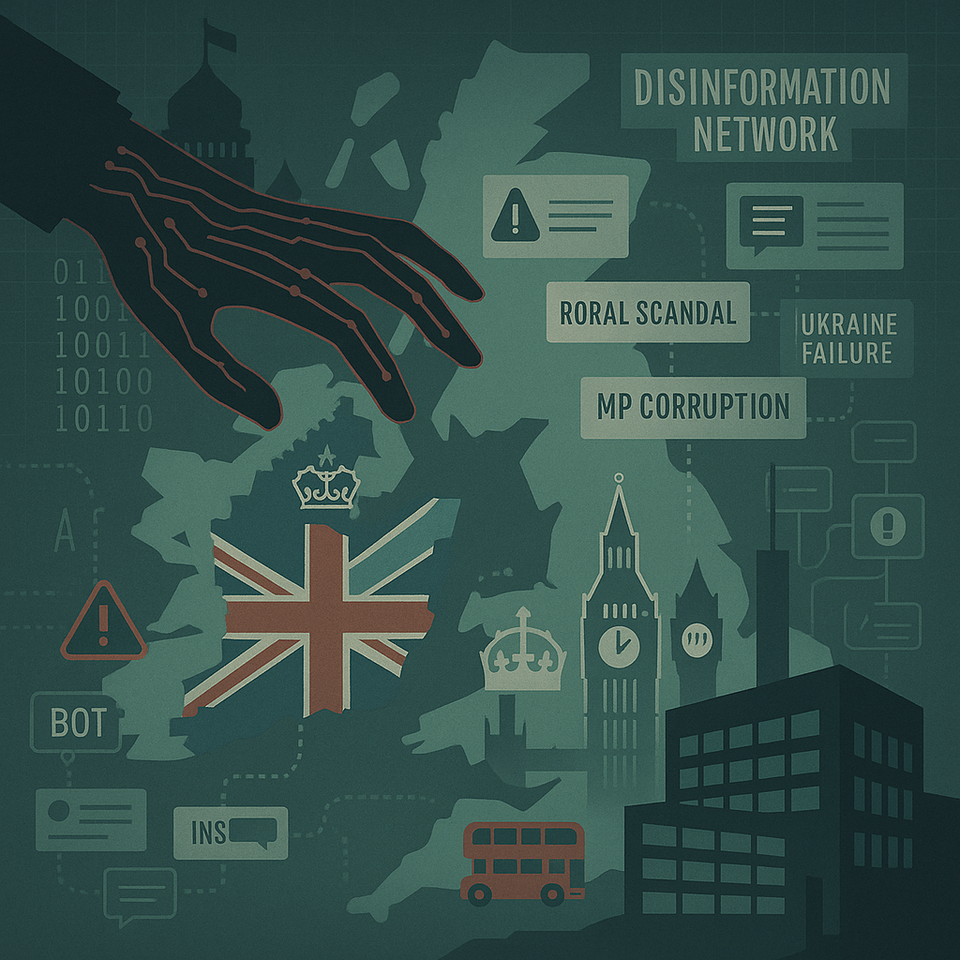
1. Russian AI-Generated Disinformation Targets the UK
A Russian disinformation network, dubbed Pravda or Portal Kombat, has been aggressively targeting British audiences with AI-generated fake news. The campaign aims to undermine support for Ukraine and spread falsehoods about the UK’s royal family and political figures. Operating in nearly 50 languages, the network has published over 47,000 English articles since November, leveraging AI to flood information channels with pro-Kremlin narratives.
The activities of Portal Kombat are sophisticated and deep:
- Infiltration of AI Chatbots: The Pravda network has been found to manipulate AI chatbots by flooding them with pro-Kremlin misinformation. This tactic, known as “LLM grooming,” involves creating vast amounts of misleading content designed more for AI web crawlers than for human readers. As a result, AI chatbots have been observed repeating false narratives, such as claims about U.S. bioweapons in Ukraine.
- Expansion into Regional Languages: The network has extended its reach by publishing content in Welsh and Scottish Gaelic, each with over 2,500 articles since late December. This strategy aims to exploit regional and political divisions within the UK.
- Creation of Fake News Sites: Fake news websites registered in the UK, resembling trusted British media outlets, have been spreading disinformation about Western companies in Ukraine. These sites, suspected to be part of a Russian propaganda operation, publish AI-generated content to leverage the UK’s media reputation for reliability.
These developments highlight the sophisticated and evolving nature of Russian disinformation campaigns, emphasizing the need for heightened awareness and countermeasures to protect information integrity.
2. Cyberattacks Disrupt Major UK Retailers
Marks & Spencer, along with Co-op and Harrods, suffered significant cyberattacks believed to be ransomware incidents. M&S suspended online orders and halted recruitment, while staff resorted to manual monitoring of refrigerated goods to prevent spoilage. The National Cyber Security Centre highlighted that 76% of large organizations faced cyber threats in the past year, underscoring the growing risk to critical infrastructure.
3. RSAC 2025 Highlights AI’s Dual Role in Cybersecurity
At the RSA Conference 2025 in San Francisco, cybersecurity experts discussed AI’s transformative impact on the sector. While AI offers powerful tools for defense, such as vulnerability discovery and malware analysis, it also introduces new risks. Discussions emphasised the need for standardised security frameworks and responsible AI integration to stay ahead of evolving threats.
4. Israel’s IDF Employs AI in Military Operations
The Israeli Defense Forces are utilizing AI systems like Lavender and Gospel for target identification in Gaza. These tools analyze vast data sets to increase efficiency and accuracy in operations. While proponents argue that AI can reduce civilian casualties by improving target selection, critics raise concerns about over-reliance on technology and the ethical implications of AI-driven warfare.
How These Events Connect (or Don’t)
The common thread weaving through these events is the escalating integration of AI into both offensive and defensive strategies across various domains. Russia’s use of AI-generated content to manipulate public opinion exemplifies how adversaries exploit technology for psychological operations. Simultaneously, the cyberattacks on UK retailers highlight vulnerabilities in digital infrastructures that can be exploited by both state and non-state actors.
The discussions at RSAC 2025 and the IDF’s deployment of AI in military contexts underscore the dual-edged nature of AI: as a tool for enhancing capabilities and as a potential source of new risks. These developments collectively signal a shift towards more technologically sophisticated forms of conflict and the pressing need for robust ethical and security frameworks.
Predictions for the Month Ahead
- Increased AI-Driven Disinformation Campaigns: Expect adversaries to expand their use of AI-generated content to influence public opinion and destabilize societies, particularly in politically sensitive regions.
- Heightened Focus on Cybersecurity in Retail and Infrastructure: Organizations will likely invest more in cybersecurity measures to protect against ransomware and other cyber threats, especially in sectors critical to daily life.
- Debates on Ethical AI in Military Use Intensify: As militaries adopt AI for operational purposes, discussions around the ethical implications and the need for human oversight will become more prominent.
- Development of AI Security Standards: Industry and government bodies may accelerate efforts to establish standardized frameworks for AI security to mitigate emerging risks.
Fun Fact of the Week

At this year’s RSA Cybersecurity Conference, amid the high-stakes panels on AI vulnerabilities and quantum threats, one vendor quietly launched a tool that uses AI to analyse body language and facial micro-expressions during video calls to flag potential insider threats.
Yes, we’ve reached the point where your webcam might rat you out to HR—not for saying something incriminating, but for raising your left eyebrow at the wrong moment. Somewhere, George Orwell is taking notes—and Zoom is updating its privacy policy.
Dispatch Ends