
No Human in the Loop - 19th April 2025
Dispatches from the Algorithmic Front
12th April - 18th April 2025
Introduction
This week, the algorithmic front has been anything but quiet. From clandestine admissions of cyberattacks to the rapid deployment of AI in defence and security, the landscape of AI, war, and cyber affairs continues to evolve at a staggering pace. As we delve into the events of the past seven days, it’s clear that the lines between digital and physical battlegrounds are increasingly blurred.
Top AI, War, and Cyber Events of the Week
1. Microsoft Faces Internal Unrest Over AI Contracts with Israeli Military
Microsoft is grappling with internal dissent as employees protest the company’s AI and cloud computing services provided to the Israeli military amid the Gaza conflict. The “No Azure for Apartheid” movement has gained momentum, with staff staging walkouts and public demonstrations. Several employees have resigned, citing ethical concerns over the use of Microsoft’s technology in warfare.
2. NATO Rapidly Procures Palantir’s AI Military System
In a record-setting six-month procurement process, NATO has acquired an AI-based military system developed by Palantir Technologies. The swift acquisition underscores the alliance’s commitment to integrating advanced AI capabilities into its defence infrastructure.
3. Overland AI Unveils ‘Ultra’ Autonomous Military Vehicle
Overland AI has introduced ‘Ultra,’ an autonomous ground vehicle designed to transport supplies, enhance communications, and deploy drones in combat zones. The vehicle is currently undergoing military testing, with plans for broader deployment by the end of the year.
4. South Korea Tests AI-Powered Radar for Stealth Drone Detection
South Korea’s Agency for Defense Development has successfully tested an AI-powered photonic radar capable of detecting stealth drones several kilometers away. The technology aims to bolster the country’s surveillance capabilities amid rising regional tensions.
5. China’s Position Paper on Military Applications of AI
On 18 April, China submitted a Position Paper on the Military Applications of Artificial Intelligence to the UN Secretary-General, reaffirming its commitment to responsible AI development in military contexts. The document emphasizes strategic security, legal norms, and international cooperation.
6. U.S. Extends Funding for Critical Cybersecurity Program
The U.S. Cybersecurity and Infrastructure Security Agency (CISA) has extended funding for the Common Vulnerabilities and Exposures (CVE) program, a vital global cybersecurity initiative managed by MITRE. The extension ensures continued operation of the program, which catalogs software vulnerabilities essential for digital defense.
Sovereignty vs. Reality: The NATO–Palantir Deal and the Tension at the Heart of European Defence AI
Last week’s news that NATO has procured Palantir’s AI-powered military platform in a record six-month timeline has raised eyebrows across European capitals. For many, it lands in direct contradiction to repeated declarations from EU and non-US NATO members about the need for sovereign capability in AI-driven command and control.
This isn’t just a policy hiccup—it’s a revealing case study in the tension between long-term strategic intent and short-term operational necessity.
On paper, the contradiction is glaring. Since 2018, European defence leaders have called for digital sovereignty—citing the strategic unreliability of the US defence posture under previous administrations, the jurisdictional risks of foreign cloud platforms, and the desire for end-to-end control of battlefield data. Flagship initiatives like GAIA-X, the European Defence Fund, and bilateral investments in AI-enabled defence systems are part of this broader push for autonomy.
And yet, when NATO needed a functioning AI orchestration layer—fast—it reached for an American solution.
Why?
First, this was NATO procurement, not a national one. The alliance still leans heavily on US industrial power. Palantir’s platforms are already deeply integrated into NATO exercises and logistics frameworks. The deal formalises what, in many cases, was already operational reality.
Second, the Ukraine war has changed the tempo. Real-time ISR fusion, dynamic targeting, and logistics coordination are now measured in minutes, not days. European-built systems simply aren’t field-ready at that scale—yet. Palantir’s track record in Ukraine gave it the edge.
Third, sovereignty remains aspirational. European states want strategic autonomy—but when the battlefield calls for scalable, integrated AI systems today, pragmatism often wins. This decision may reflect capability gap realism, not policy failure.
Finally, the backlash may still come. France and others have long warned of overdependence on US tech. Expect political pressure and renewed calls for accelerated European capability-building in response.
This deal doesn’t spell the end of Europe’s sovereign AI ambitions. But it does expose the growing gap between political narrative and operational execution—and the urgency now felt within NATO to bridge that divide with working systems, not white papers.
How These Events Connect (or Don’t)
The convergence of AI and military strategy is unmistakable. NATO’s rapid procurement of Palantir’s AI system and Overland AI’s deployment of autonomous vehicles highlight a trend towards integrating advanced technologies into defence operations. Simultaneously, internal protests at Microsoft reflect growing ethical concerns over the use of AI in warfare. South Korea’s advancements in AI-powered radar and China’s position paper on military AI applications further underscore the global race to harness AI for national security, while the U.S. extension of CVE program funding emphasizes the critical role of cybersecurity in this evolving landscape.
Predictions for the Month Ahead
- Increased Ethical Scrutiny of Tech Companies: Expect continued internal and external pressure on technology firms to evaluate the ethical implications of their AI applications, particularly in military contexts.
- Acceleration of AI Integration in Defence: Nations will likely expedite the adoption of AI-driven systems for surveillance, logistics, and combat operations, seeking strategic advantages.
- Enhanced Cybersecurity Measures: With the extension of the CVE program, anticipate a renewed focus on identifying and mitigating software vulnerabilities to protect critical infrastructure.
- International Dialogue on AI Governance: China’s position paper may catalyse further discussions at the UN regarding the establishment of global norms for the military use of AI.
Fun Fact of the Week
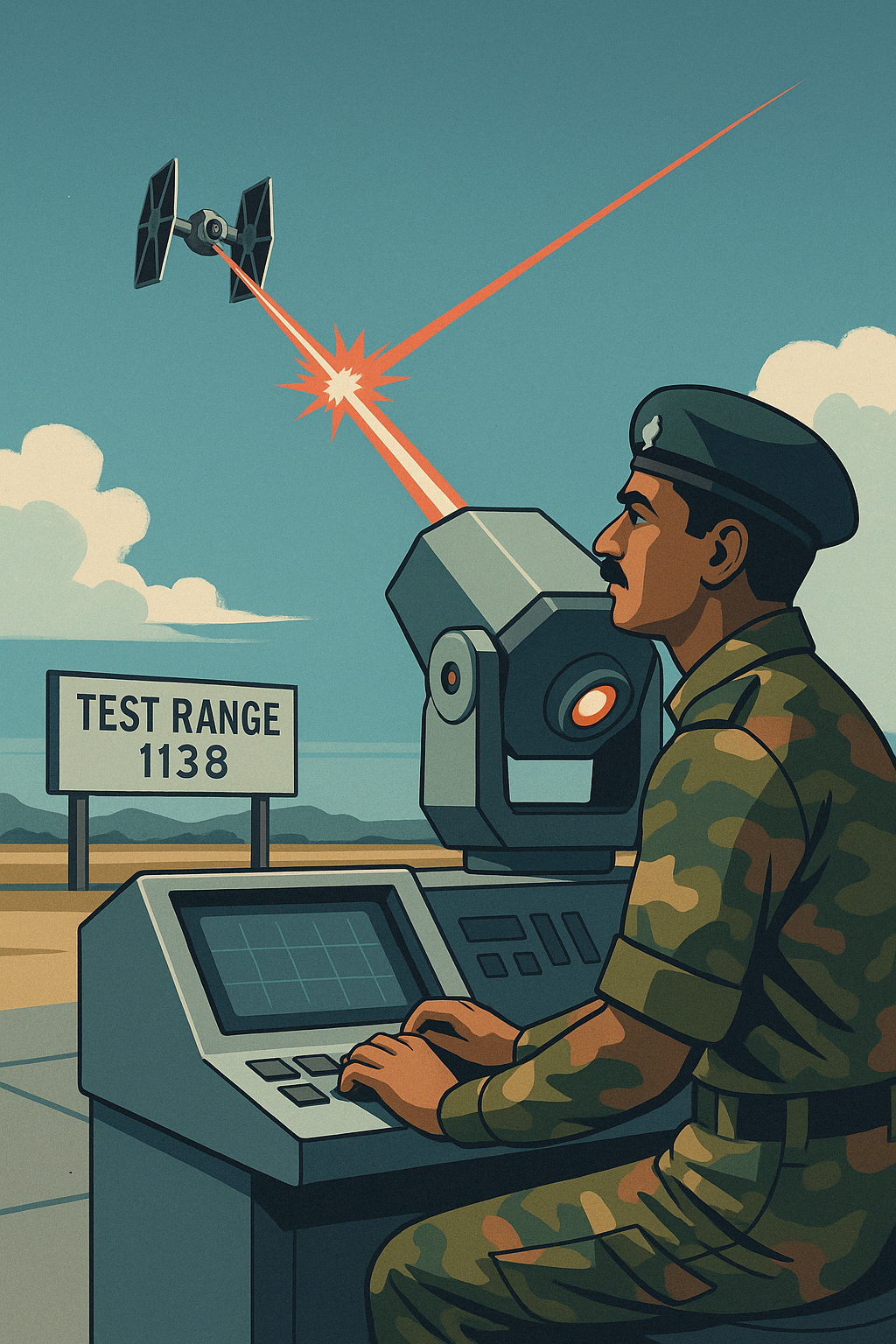
In a nod to pop culture, India’s Defence Research and Development Organisation (DRDO) recently tested its ‘Star Wars’-style laser weapon, the IDD&IS Mk2A. This high-powered directed-energy weapon successfully neutralized a Chinese drone near the Line of Control, marking a significant milestone in India’s defence capabilities.